Diamond basics
How diamond quality is graded
Diamond Quality
Beautiful, rare, priceless
Every diamond is unique – a miracle of nature, place and time. And each one has specific qualities that determine its value.
Until the middle of the 20th century, there was no agreed standard for grading diamonds. GIA created the first globally accepted standard for describing diamonds: color, clarity, cut and carat weight. Today the 4Cs are the universal method for assessing the quality of any diamond, anywhere in the world, and they describe diamond quality in a clear, universal language.
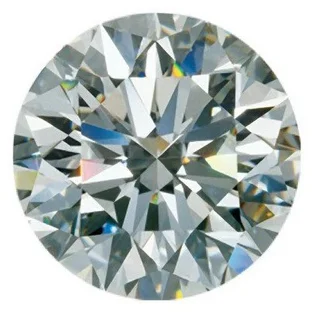
We offer diamonds graded by GIA
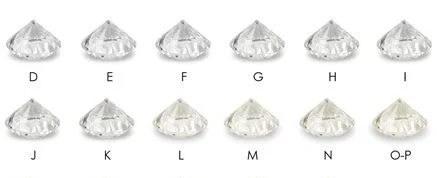
Color scale
Color
- D colorless
- E
- F
- G near colorless
- H
- I
- J
- K faint
- L
- M
- N very light
- O
- P
- Q
- R
- S light
- T
- U
- V
- W
- X
- Y
- Z
Understanding what diamond color means helps you choose the right stone. Color grading is based on the absence of color. A chemically pure and structurally perfect diamond has no hue, like a drop of pure water, and therefore a higher value.
A gemologist who specializes in color measures how colorless a diamond is under controlled lighting and precise conditions. The result is expressed on the GIA scale, from D to Z.
Many of these color differences are so subtle that they are invisible to the naked eye, yet they make a very big difference in diamond quality and price.
Clarity scale
Clarity
- FL
- IF
- VVS1
- VVS2
- VS1
- VS2
- SI1
- SI2
- I1
- I2
- I3
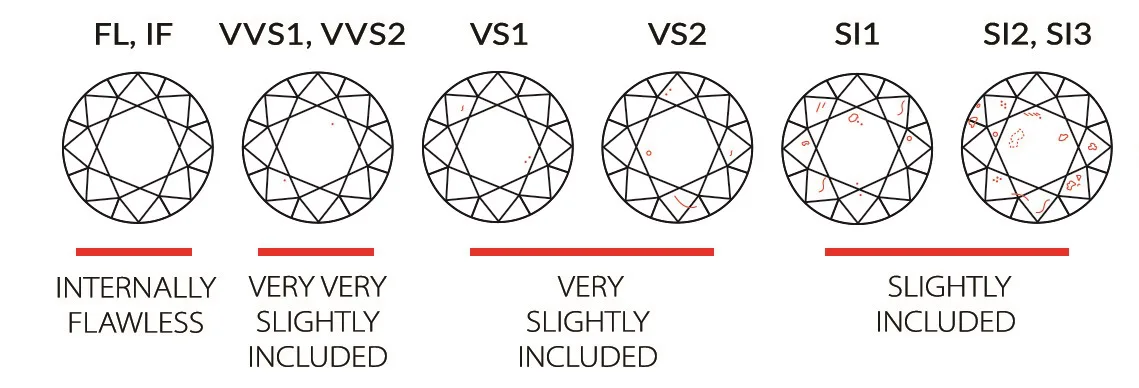
Diamonds are carbon exposed to extreme heat and pressure. This creates internal characteristics called inclusions and external ones called blemishes.
Clarity grading means assessing the number, size, relief, nature and position of these characteristics, and how they affect the overall appearance of the stone.
If you are trying to decide on the best clarity, remember that no diamond is perfectly pure. But the closer it comes to purity, the higher its value.
- FL
- No inclusions or blemishes visible under 10x magnification.
- IF
- No inclusions visible under 10x magnification.
- VVS1, VVS2
- Inclusions so slight they are very difficult to see under 10x magnification.
- VS1, VS2
- Inclusions seen with effort under 10x magnification, but minor.
- SI1, SI2
- Inclusions noticeable under 10x magnification.
- I1, I2, I3
- Obvious inclusions under 10x magnification that may affect transparency and brilliance.
Cut scale
Cut
- Excellentexcellent
- Very goodvery good
- Goodgood
- Fairfair
- Poorpoor
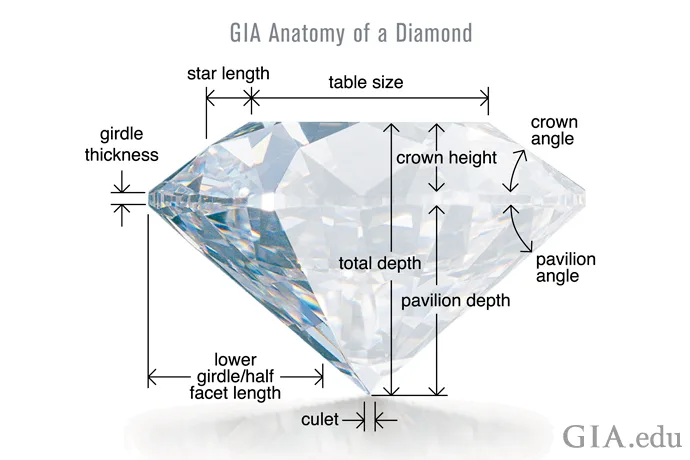
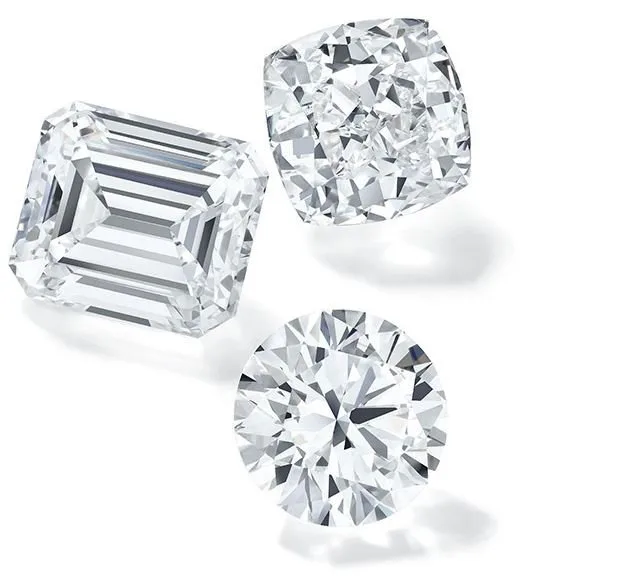
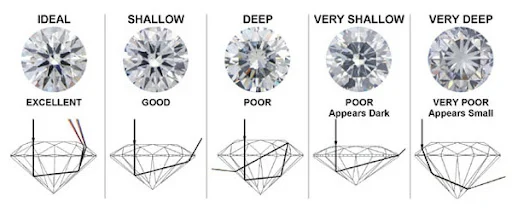
The GIA Diamond Cut Scale for standard round brilliant diamonds in the D-to-Z color range has 5 grades, from Excellent to Poor, and is the standard scale for grading diamond cut.
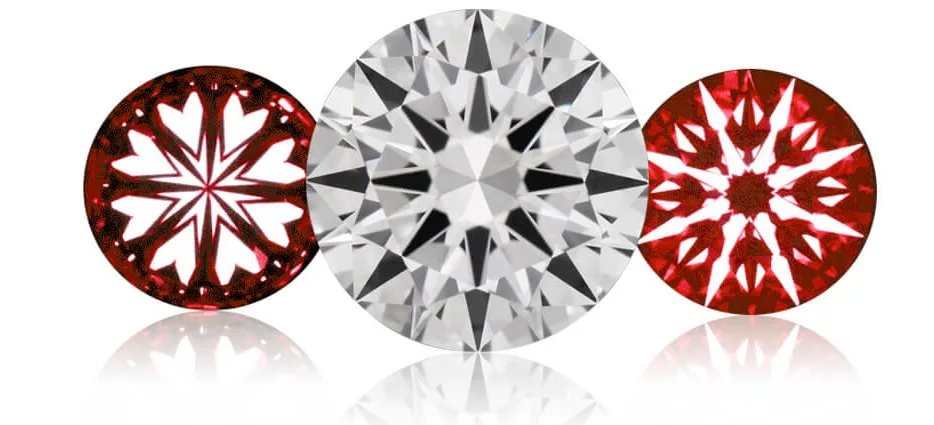
Achieving the best cut is reflected in the stone’s final beauty and value. Of all the 4Cs, it is the most complex and technically difficult to analyze. GIA calculates the proportions that affect a diamond’s appearance, and specialists study how well the diamond interacts with light to create the desired visual effects – reflection, refraction and sparkle.
Quality
Carat weight
Carat weight
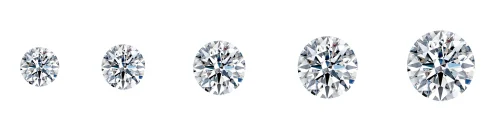
The carat is the unit that measures a diamond’s weight: 1 carat (ct) = 0.20 grams. A diamond’s value, however, is set by all of the 4Cs, not by carat weight alone. All else being equal, price rises with weight, because larger diamonds are rarer and more desirable.
Even so, two diamonds of the same carat weight can differ greatly in price, depending on the other three factors: color, clarity and cut.
- 0.50 ct
- 0.75 ct
- 1.00 ct
- 1.50 ct
- 2.00 ct
GIA report
The GIA report
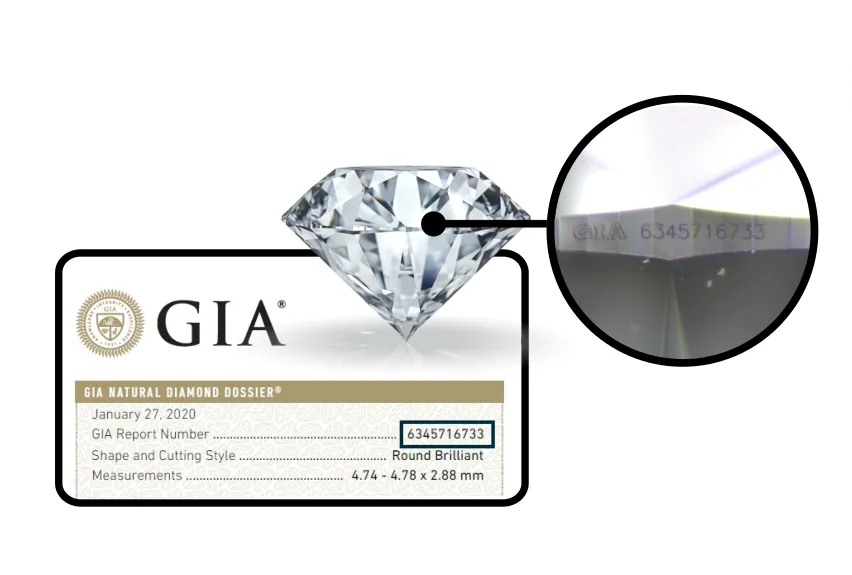
The GIA report gives an impartial assessment of the 4Cs. As an extra safeguard, the diamond has a laser inscription on its girdle with the report number – for example, “GIA 6345716733”.
The GIA report guarantees the diamond’s origin and quality.
Gemological Institute of America · Learn more at GIA.edu
VALENTIN Gold & Diamonds
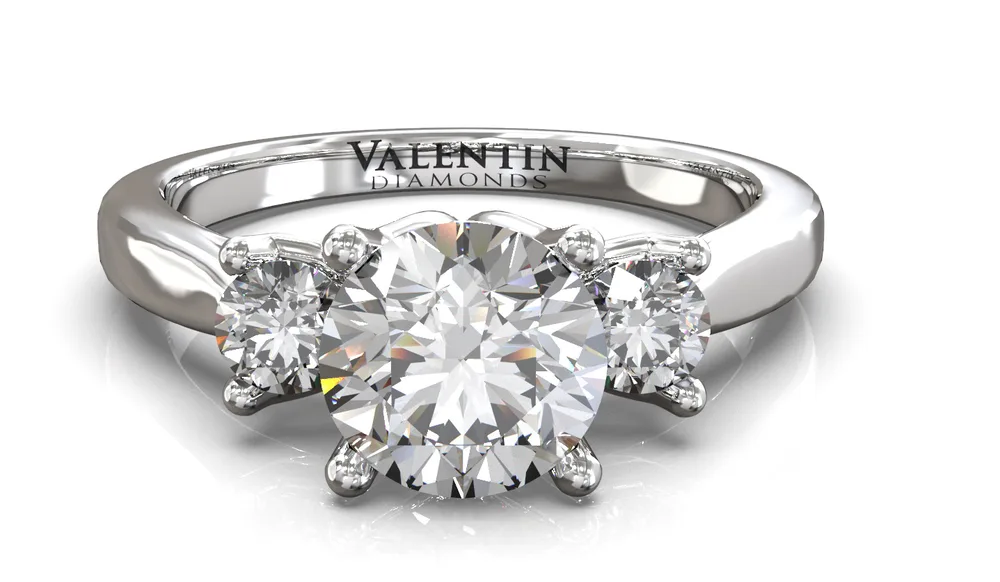
VALENTIN Gold & Diamonds is a Bulgarian company founded in 1986, offering fine jewelry and precious stones. Our jewelry is a benchmark of quality and individuality. We put our clients first and follow every current standard of security and professional ethics in offering diamond jewelry. Diamonds of 0.30 ct and above come with an individual GIA or IGI report.
GIA’s diamond grading standards are accepted worldwide – almost every diamond is described in the language GIA developed. Over the years, other laboratories have issued reports too, but GIA is recognized as the unrivaled source of accuracy and integrity in diamond grading. A GIA report is a guarantee of the origin and value of the diamonds we offer.
With compliments of